
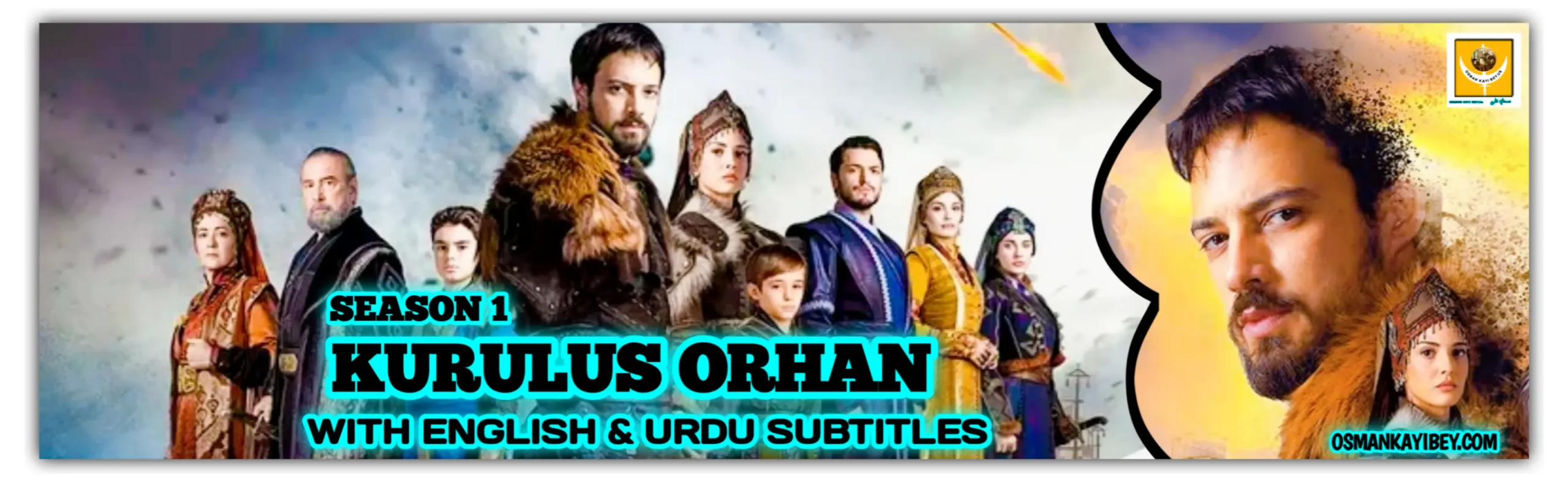
Kurulus Orhan Season 1 With English And Urdu Subtitles
Kurulus Orhan Season 1 represents a decisive shift in the historical narrative that began with Kurulus Osman. While earlier chapters focused on survival and resistance, this season explores consolidation, responsibility, and the weight of inheritance. Orhan Bey stands at a crossroads where legacy alone is no longer enough; vision, discipline, and political awareness become necessary for progress.
The series carefully portrays how a growing leadership faces challenges not only from enemies but also from within its own structure. Power brings expectations, and Orhan Bey must balance loyalty, justice, and foresight while protecting the foundations laid by his predecessors.
Orhan Bey as a Transitional Leader
Orhan Bey is written as a transitional figure between two eras. Unlike his father, whose journey was defined by rebellion and expansion, Orhan’s journey revolves around preservation and refinement. He understands that unrestrained strength can weaken a system if not guided by principles.
His calm demeanor, patience in decision-making, and ability to absorb counsel distinguish him from traditional warrior archetypes. The series shows how leadership matures when emotion is replaced by responsibility. Orhan’s evolution is gradual, realistic, and rooted in consequences rather than sudden heroism.
The Role of Women and Moral Influence
One of the most understated strengths of Kurulus Orhan Season 1 lies in its portrayal of women as moral anchors and strategic thinkers. Malhun Hatun’s presence reflects continuity of wisdom and resilience. Her influence is not loud but deeply effective, shaping outcomes through insight and restraint.
The lasting impact of Bala Hatun’s values continues to guide the narrative. Her teachings echo through Orhan Bey’s internal conflicts, reminding viewers that leadership is inherited not just through bloodlines but through principles.
Kurulus Orhan Season 1 With English Subtitles

Kurulus Orhan Season 1 With Urdu Subtitles

I dedicate my time and effort to sharing Islamic history and the legacy of our heroes with the world. Your small donation helps me continue this mission. May Allah reward your support. 🤲
💖 Don’t be shy, even $3 makes a difference and helps keep this work going! ❤️
Internal Conflict and Ideological Division
This season places heavy emphasis on internal fractures that threaten unity. Tribal leaders, military figures, and political influencers often clash due to ego, fear, or ambition. These conflicts are not portrayed as evil versus good but as competing visions of power.
Orhan Bey’s greatest challenge is not defeating opposition but managing disagreement without destabilizing authority. The series illustrates how unchecked ambition can be more dangerous than external threats, a lesson often overlooked in historical storytelling.
Governance, Law, and Early State Structure
Kurulus Orhan Season 1 subtly introduces the concept of structured governance. Systems of accountability, discipline among leadership, and early legal awareness begin to emerge. These moments signal a move away from personality-based rule toward institutional stability.
Justice is presented not as punishment alone but as balance. Orhan Bey is frequently placed in situations where mercy and firmness must coexist. These choices highlight why his role is critical in shaping a sustainable future rather than a temporary reign.
Faith as a Guiding Force
Faith is woven naturally into the narrative, not as spectacle but as guidance. Characters reflect, seek counsel, and make sacrifices based on belief and accountability. This spiritual grounding separates Kurulus Orhan from conventional historical dramas that rely solely on political ambition.
These moments reinforce the idea that leadership is a trust, not a privilege. Orhan Bey’s restraint often stems from awareness of responsibility before Allah rather than fear of opposition.
Long-Term Historical Significance
Kurulus Orhan Season 1 serves as a foundation story rather than a climax-driven narrative. It prepares the ground for future developments by explaining why patience, structure, and moral clarity matter more than constant conflict.
This season gains value over time because it explains how continuity is protected after revolution. It shows that building a future requires different qualities than fighting for survival.