
Mehmed Fetihler Sultani Season 3 With English Subtitles
Mehmed Fetihler Sultani Season 3 unfolds as one of the most mature, multi-layered, and historically enriched seasons of the series. From its very first episode the narrative abandons simple conquest storytelling and enters a world governed by ideological battles, sacred relics, philosophical reflections, palace insecurities, and the grand geopolitical game of empires. At the center stands Sultan Mehmed, no longer just the conqueror of Constantinople, but a visionary shaping the future identity of the Ottoman world.
Mehmed Fetihler Sultani Season 3 With English Subtitles
The season begins by grounding Mehmed’s inspiration in the echoes of past Islamic military triumphs. His contemplation of the Battle of Yarmouk becomes a symbolic moment where old victories breathe new purpose into a modern empire. The connection between these two eras is painted not as nostalgia but as a divine reminder that civilizations rise when their leaders understand both destiny and responsibility. This season pushes Mehmed into that existential space, showing him wrestling not just with battles but with the heavy burden of shaping history.
Yet, as the Ottoman Empire sets its eyes on the Black Sea, an entirely new world opens up around the Pontus Empire. The cultural, religious, and political tensions of the 15th century resurface with renewed intensity, transforming Season 3 into a carefully woven tapestry of ambition, resistance, diplomacy, and mysterious spiritual messages hidden beneath centuries-old architecture.
Season 3 — What’s New, What’s at Stake
Season 3 introduces a narrative arc that feels larger, darker, and more intellectually driven. The writers shift the tone by blending historical accuracy with emotional depth and mystical symbolism. Instead of focusing solely on territorial expansion, the storytelling emphasizes what an empire must sacrifice to survive. As Mehmed outlines his vision of the “Three Romes,” the season dives deeper into his belief that the Ottoman Empire is not merely a political state but the final inheritor of global civilization.
Mehmed Fetihler Sultani Season 3 English Subtitles


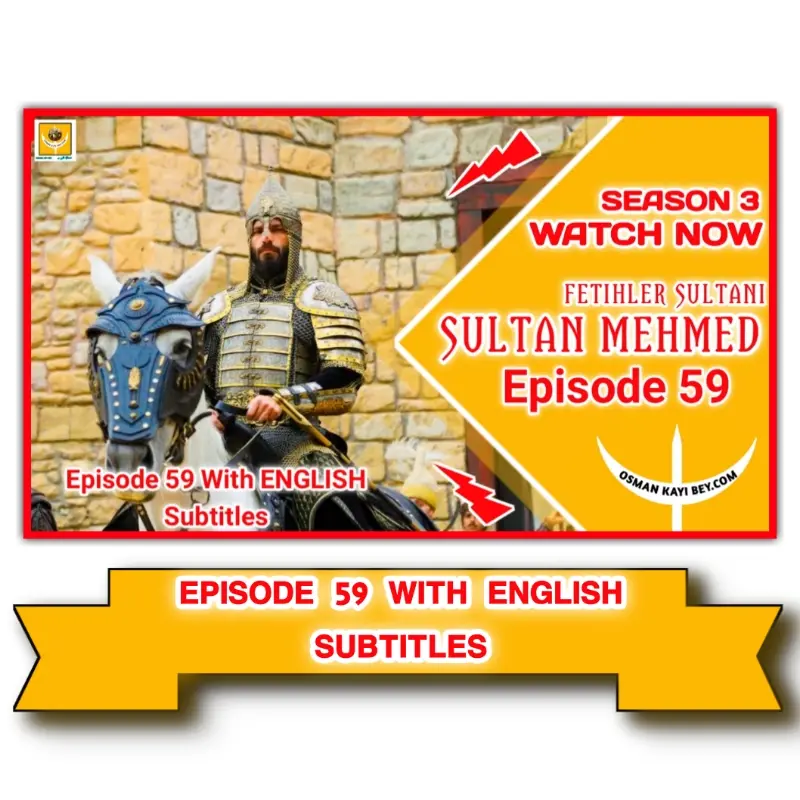
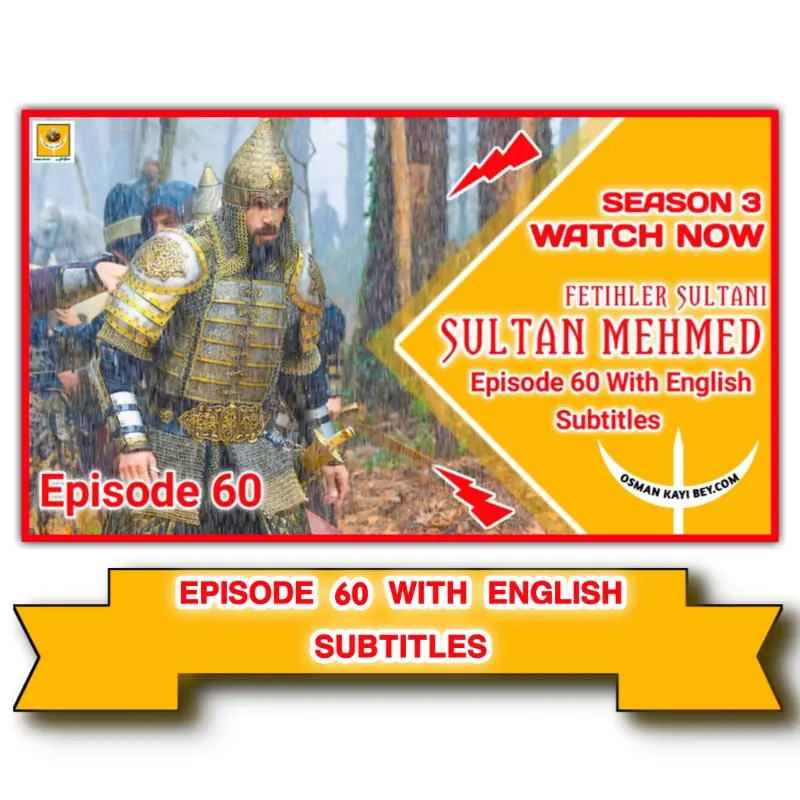
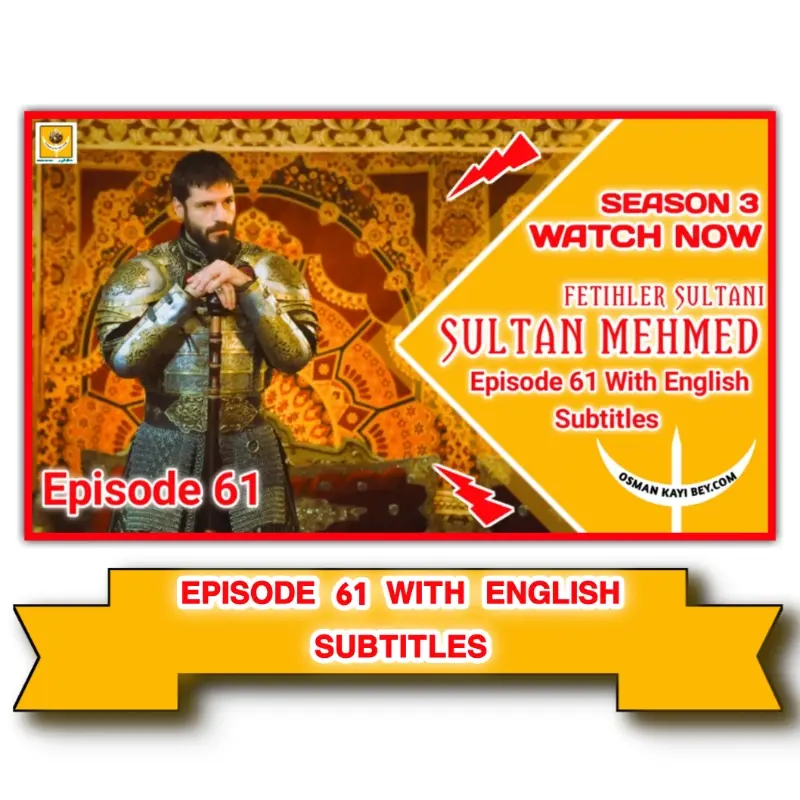
I dedicate my time and effort to sharing Islamic history and the legacy of our heroes with the world. Your small donation helps me continue this mission. May Allah reward your support. 🤲
💖 Don’t be shy, even $3 makes a difference and helps keep this work going! ❤️
This worldbuilding is not rushed. It unfolds slowly, through long reflective scenes, harsh diplomatic meetings, whispered palace fears, and the growing pressure of enemies forming unseen alliances. The tension grows without needing constant battles—because here, the true war is for influence, legitimacy, and the right to define the future.
The Rise of the Three Romes Vision
One of the most powerful arcs of Season 3 is Mehmed’s philosophical vision. He believes that Rome’s legacy exists in three forms—Old Rome, New Rome, and the final Rome that history still awaits. The Ottoman Empire, in his eyes, is destined to be that final Rome, completing a civilizational circle that connects past conquerors, religious transitions, and imperial ideologies. This idea gives him direction beyond the battlefield.
The series takes time to show how deeply Mehmed internalizes this idea. His long silent walks through Ayasofya, his conversations with scholars, his reflections on past commanders, and even his tense moments alone all contribute to understanding his inner world. He is not simply expanding territory; he is trying to redefine the ideological map of Eurasia. This ambitious vision puts him on a collision course with the last surviving fragment of Byzantine heritage — the Pontus Empire.
His eyes turn to the Black Sea not because of wealth or strategic routes alone, but because Pontus symbolizes unfinished work. It represents a remnant of an empire he defeated, yet still breathes. Mehmed cannot accept a half-finished destiny.
The Shadow of Pontus — A Civilization at the Edge
One of the strongest narrative threads of the season builds around David Komnenos, the ruler of the Pontus Empire. His storyline is not portrayed as a simple antagonist plot. Instead, it is treated with depth, cultural richness, and emotional weight. He is shown as a man watching the world change faster than he can protect it. His empire is isolated, weakened, but still proud of its Byzantine heritage.
The Black Sea becomes a symbolic barrier rather than a geographical one—a border between a fading world and an emerging empire. David’s desperation grows more visible as he reaches out to Pope Pius II. This alliance is not built on diplomacy alone. He offers something far more powerful: relics from Sümela Monastery, hidden for centuries, wrapped in mysticism and religious significance.
These relics are not mere props in the story. Their introduction opens a doorway into understanding medieval Christian political behavior. Relics were more than objects of worship; they were bargaining chips, capable of influencing kings, popes, and entire armies. Their presence in the story gives historical realism and adds spiritual tension to the unfolding geopolitical drama.
David’s attempts to form alliances with some Anatolian beyliks also highlight how complex regional politics were during Mehmed’s time. Even Muslim rulers sometimes feared Ottoman centralization, creating secret rivalries that threatened Mehmed from all directions.
Mystery in Ayasofya — The Aramaic Parchment
One of the most fascinating elements of Season 3 emerges deep in the bowels of Ayasofya. The discovery of a parchment with hidden Aramaic inscriptions becomes a turning point—not for the empire, but for Mehmed’s inner battle. When the letters appear under heat, what they reveal is not entirely clear. Prophecies? Warnings? Codes? The uncertainty makes it more haunting.
The series beautifully shows the emotional impact such a mysterious object can have on a ruler living in an age where religion, mysticism, and power were deeply intertwined. Mehmed becomes restless. He becomes curious. He becomes unsettled by the possibility that the message might be divine… or might be a trap.
The introduction of Tokatlı Deli Lütfi, known for his brilliance and eccentricity, adds a unique flavor to this arc. He represents the intellectual chaos of the era—where scholars bordered between genius and madness. But Mehmed’s choice of Vlad Tepes to retrieve him adds a far darker shadow. Vlad’s presence always carries psychological weight; history remembers him not for diplomacy but for brutality.
This decision alone foreshadows the storm that will inevitably reach the empire.
Palace Conflicts — The Silent Wars Within
Season 3 also spends considerable time exploring palace politics. These are not mere side stories but essential layers that show how empires are not destroyed by enemies first, but by internal fractures.
Long, emotionally intense scenes display the struggles within royal households:
wives competing for influence, mothers guarding their children’s futures, advisers trying to steer the Sultan’s decisions, and princes caught in the crossfire of expectations and danger.
Mehmed’s greatest inner torment is expressed clearly:
Should he protect the state or protect his son?
This question eats at him, revealing a human vulnerability beneath the emperor’s armor. Season 3 forces him to face the truth that leadership demands sacrifices—even of the heart.
The palace sequences, filled with candle-lit corridors, whispered conversations, and emotional confrontations, deepen the narrative and humanize the larger-than-life emperor.
Long-form Analysis and Worldbuilding
The strength of Season 3 lies in how it blends history with cinematic storytelling. The creators balance real events with conceptual depth, ensuring the audience not only learns history but feels connected to it.
The philosophical dialogues, the cultural details about Pontus monasteries, the architectural secrets of Ayasofya, and the political fragility of Europe create a multi-dimensional world. The writers use long narrative arcs instead of episodic summaries, allowing the story to breathe at its own pace.
This makes the season especially appealing to viewers who enjoy slow-burning historical dramas rather than surface-level plots.
List: Major Character Transformations
- Mehmed becomes more visionary, philosophical, and emotionally burdened
- David Komnenos transforms from a regional ruler to a desperate strategist
- Vlad Tepes returns with unsettling intensity
- Tokatlı Lütfi brings intellectual chaos and mystery
- Palace women evolve into key power brokers
- Religious leaders influence politics across borders
Table: Political Factions and Their Stakes
| Faction | Motive | Influence | Hidden Weakness |
|---|---|---|---|
| Ottoman Empire | Expansion & civilizational leadership | Strong armies, ideological unity | Internal rivalries |
| Pontus Empire | Survival & Byzantine revival | Geography, relics | Weak manpower |
| Vatican | Counter-Ottoman influence | Diplomacy, moral authority | Slow mobilization |
| Anatolian Beyliks | Autonomy & regional control | Local power bases | Division & fear |
| Palace Court | Influence & survival | Access to Mehmed | Jealousy & mistrust |
Quote
“A ruler carries not the weight of a crown but the weight of every life shaped by his decisions.”
Key Takeaways
- Season 3 shifts from battles to political, spiritual, and philosophical struggles
- Mehmed’s vision of the Three Romes becomes a core narrative driver
- The Pontus Empire emerges as a cultural and symbolic threat
- Hidden relics and manuscripts shape international diplomacy
- Palace tensions reveal the emotional cost of empire-building
- The series blends realism with mysticism to create powerful symbolism
FAQ
Many elements are historically grounded, especially Pontus, Vatican relations, and Mehmed’s long-term ambitions.
It symbolizes destiny, prophecy, and the unknown forces shaping Mehmed’s decisions.
Yes, but the focus is more on diplomacy, alliances, and internal power struggles.
His presence adds psychological tension and foreshadows darker events.
Conclusion
Mehmed Fetihler Sultani Season 3 stands as one of the richest seasons in the entire series. It explores Mehmed not just as a conqueror, but as a philosopher-king wrestling with destiny, faith, politics, and family. Through long scenes, deep symbolism, and meticulous worldbuilding, the season immerses viewers into a world where civilizations collide, religions compete for influence, and leaders carry burdens that shape centuries.
Episode 50 lays a powerful foundation for everything that follows—introducing a vision that stretches across continents, mysteries hidden beneath sacred structures, alliances built on relics, and emotional cracks that threaten the palace itself. Season 3 is not just a chapter in history; it is a journey into the soul of an empire.