
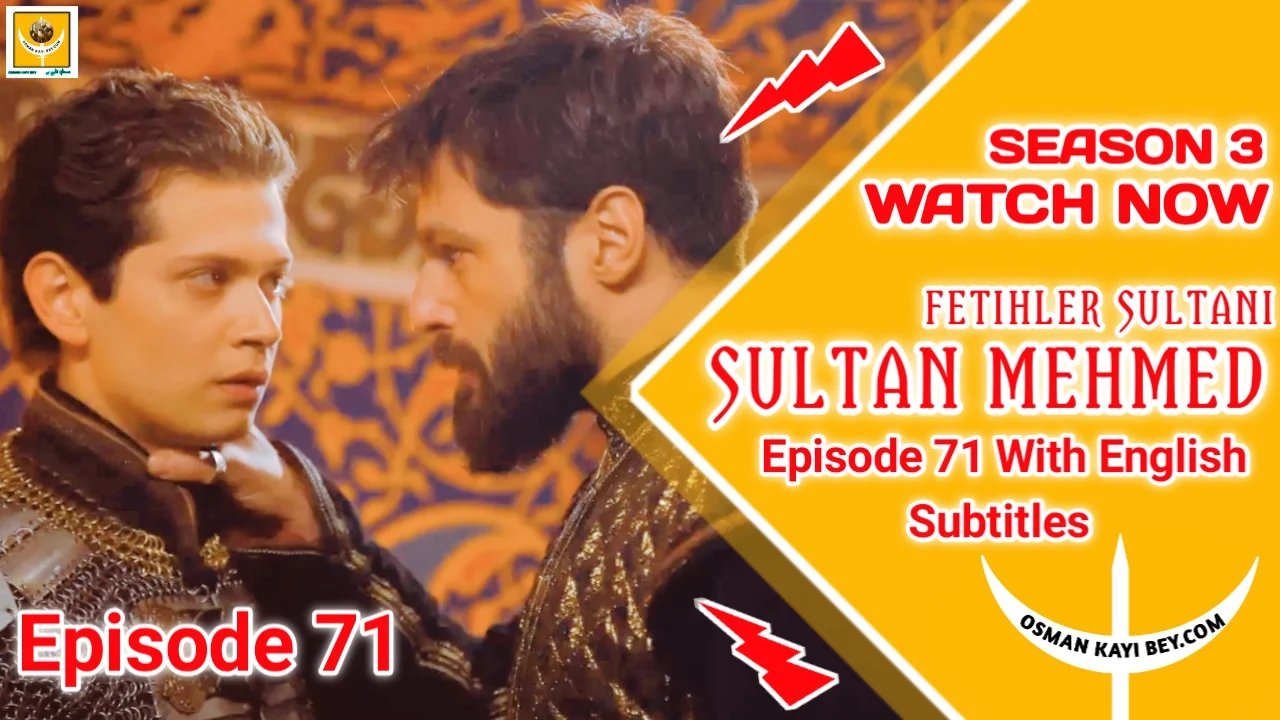
Mehmed Fetihler Sultani Season 3 Episode 71 With English Subtitles
A New Threshold in the Ottoman Struggle
Mehmed Fetihler Sultani Season 3 Episode 71 With English Subtitles unfolds as a layered political and emotional battlefield where strategy, betrayal, and destiny collide. This episode does not rush through events. Instead, it carefully builds tension around power shifts that will shape the future of Bursa, Germiyan, and the wider frontier. Every decision carries weight, and every character stands at a crossroads between loyalty and ambition.
Although the surface narrative revolves around military movements and personal conflicts, the deeper structure reveals a systematic consolidation of authority. Sultan Mehmed’s long-term imperial mindset silently frames the episode. Even when he is not physically present in every scene, his philosophy of centralized power and decisive conquest shapes the environment in which Orhan Bey and the other beys operate.
The storytelling flows through multiple interconnected crises. The struggle for Biga and Gemlik represents territorial ambition. Nilüfer’s captivity represents emotional vulnerability exploited for political leverage. Meanwhile, internal betrayal exposes cracks within the Ottoman ranks. Together, these threads create a powerful narrative about state-building under pressure.
Orhan Bey’s Grand Strategy for Biga and Gemlik
Orhan Bey’s objective is direct yet visionary: seize Biga Bogazi from the Karesioglu and capture Gemlik Port from Byzantine control. However, these targets are not random. Biga is a maritime gateway. Gemlik is an economic artery. Whoever commands them controls trade flow, naval mobility, and strategic depth.
Orhan does not move blindly. He calculates geography, supply lines, and political timing. Biga offers control over sea passage that connects Anatolia to larger trade routes. Gemlik, on the other hand, strengthens Bursa’s commercial network and reduces Byzantine influence in the region. These moves signal a transition from a frontier principality to a structured regional power.
Yet Orhan’s command that Demirhan be brought before him immediately introduces another dimension. This is not just about territory. It is about internal security. Demirhan may hold critical information that could expose hidden conspiracies. Orhan understands that expansion without internal stability invites collapse. Therefore, he balances external conquest with internal investigation.
The Psychological Depth of Orhan Bey
Orhan’s leadership style reflects controlled intensity. He is not impulsive, even when provoked. His calm authority contrasts sharply with Shahinshah’s desperate recklessness. While others react emotionally, Orhan responds strategically. This difference defines who builds empires and who destroys themselves through panic.
Shahinshah’s Desperation and the Cost of Betrayal
Shahinshah’s fear of exposure drives him into moral darkness. To prevent Demirhan from reaching Bursa, he is prepared to eliminate Boran, Cerkutay, and Temirboga. His logic is simple: remove witnesses, erase the threat. However, this short-term calculation ignores the cultural and spiritual foundations of the Ottoman frontier.
In this society, loyalty is sacred. The declaration that “the head of the traitor and his weapon are lawful to my sword” is not empty rhetoric. It reflects a justice system rooted in honor. Shahinshah underestimates this moral framework. His betrayal is not merely political; it is existential. If exposed, he will not only lose power but legitimacy.
His character embodies the theme of insecurity masked as ambition. He fears losing influence, and therefore he sacrifices trust. However, history repeatedly shows that internal treachery rarely remains hidden. His path appears increasingly unsustainable.
Nilüfer Hatun’s Captivity and Asporca’s Political Game
When Sultan Orhan discovers that Nilüfer is held by Asporca, the emotional tension intensifies. However, the episode carefully avoids reducing this to a simple rescue narrative. Instead, it transforms Nilüfer into a central political piece on a larger chessboard.
Asporca does not treat Nilüfer as a prisoner alone. She treats her as leverage. By controlling Nilüfer, she attempts to manipulate Orhan’s decisions. This reveals Asporca’s intelligence and understanding of power dynamics. She knows that personal attachment can influence political judgment.
However, Orhan refuses to allow emotion to cloud strategy. He must save Nilüfer, yet he cannot compromise Biga and Gemlik. This balancing act illustrates the burden of leadership. A ruler cannot separate personal life from state responsibility. Both merge into one continuous battlefield.
The Confrontation Between Nilüfer and Dafne
Within captivity, Nilüfer faces Dafne’s betrayal. Their confrontation is not only physical but symbolic. Trust shattered within enemy walls leaves deeper scars than external wounds. If Nilüfer emerges marked by injury, that scar becomes a visible reminder of survival and resilience.
Her pregnancy adds another layer of meaning. Protecting the unborn child symbolizes safeguarding dynastic continuity. The future of the Ottoman line rests not only on swords but on survival within political intrigue. Nilüfer’s endurance strengthens her transformation from noblewoman to political force.
Sultan Orhan and Asporca: Fire That Reshapes Alliances
The hostility between Orhan and Asporca escalates beyond negotiation. Yet the discovery of Shahinshah’s betrayal introduces a dangerous secret. Asporca now holds information that could alter power dynamics dramatically.
If she reveals Shahinshah’s treachery, she weakens an internal enemy but empowers Orhan. If she withholds it, she retains leverage but risks instability that could consume her as well. This dilemma reflects a recurring political truth: information is power, and silence can be more explosive than confession.
The shifting balance between Orhan and Asporca demonstrates how enemies sometimes share temporary interests. Political landscapes rarely remain static. They evolve according to advantage.
Germiyan’s War Preparations and Alaeddin’s Burden
In Germiyan Palace, emotional and political tensions converge. Gonca’s attachment to Alaeddin deepens after humiliation, reflecting how adversity often strengthens bonds. Meanwhile, Mehmet declares war, escalating the situation into open confrontation.
Alaeddin’s safe return to Bursa becomes strategically vital. The knowledge he carries could influence Orhan’s war planning. Intelligence shapes victory long before armies clash. Therefore, his journey represents more than escape. It represents the fragile line between preparedness and vulnerability.
The episode subtly connects marriage alliances with political survival. When war erupts, romantic ties become liabilities or strategic tools. Love and diplomacy intertwine within a volatile environment.
A Wedding Shadowed by Blood
While Bursa prepares for Fatma and Yigit’s wedding, tragedy brews beneath celebration. Flavius, unable to accept Fatma’s marriage, confronts unresolved emotions. When Yigit witnesses them together, anger overrides reason.
The resulting clash ends with Flavius stabbing Yigit. This single act transforms a joyous event into potential chaos. The dagger symbolizes how suppressed feelings eventually erupt into irreversible consequences.
If Yigit dies, internal stability in Bursa may fracture. Suspicion, revenge, and scandal could follow. Flavius’ psychological breakdown reflects the destructive power of obsession. He stands as a reminder that personal turmoil can destabilize entire communities.
Mehmed Sultan’s Long Vision of Centralized Power
Above these unfolding conflicts stands Sultan Mehmed’s broader philosophy. His approach focuses on eliminating fragmentation among beyliks and building centralized authority. Maritime control, intelligence networks, and decisive justice form pillars of his long-term design.
He understands that empires collapse when internal betrayal weakens unity. Therefore, rooting out treachery becomes as important as conquering land. His strategy integrates military expansion with institutional discipline.
The episode subtly reinforces this ideology. Each subplot, whether in Biga, Germiyan, or Bursa, reflects the tension between fragmentation and consolidation. Mehmed’s vision requires both territorial success and moral authority.
I dedicate my time and effort to sharing Islamic history and the legacy of our heroes with the world. Your small donation helps me continue this mission. May Allah reward your support. 🤲
💖 Don’t be shy, even $3 makes a difference and helps keep this work going! ❤️
If You Want Any Specific Episode Message Me on WhatsApp
Join Our Official WhatsApp & Telegram Channel
Mehmed Fetihler Sultani Season 3 Episode 71 With English Subtitles
SOURCE 1
Themes and Symbolic Layers
Betrayal versus loyalty remains the dominant theme. Characters who abandon loyalty descend into desperation. Those who uphold it gain resilience even in captivity.
SOURCE 2
Love versus duty shapes Orhan’s struggle. He must save Nilüfer while securing the future of his state. This conflict humanizes leadership without weakening it.
SOURCE 3
I dedicate my time and effort to sharing Islamic history and the legacy of our heroes with the world. Your small donation helps me continue this mission. May Allah reward your support. 🤲
💖 Don’t be shy, even $3 makes a difference and helps keep this work going! ❤️
Blood before celebration symbolizes the fragility of peace. Even during weddings, unresolved tensions wait beneath the surface.
Key Takeaways
Orhan Bey’s campaign for Biga and Gemlik signals strategic transformation toward maritime dominance.
Shahinshah’s betrayal illustrates how fear-driven ambition leads to self-destruction.
Nilüfer’s captivity strengthens her symbolic and political significance.
Alaeddin’s intelligence may reshape upcoming military outcomes.
Flavius’ impulsive violence threatens internal stability in Bursa.
Sultan Mehmed’s overarching philosophy emphasizes unity, discipline, and calculated expansion.
Frequently Asked Questions
What makes this episode significant in Season 3?
It connects personal conflicts with larger state-building efforts, showing how internal stability determines external success.
How does the struggle for Biga and Gemlik affect future events?
Control over these regions strengthens economic and naval power, paving the way for broader territorial expansion.
Will Shahinshah’s betrayal be exposed?
Narrative direction strongly suggests eventual exposure, as secrets in frontier politics rarely remain hidden.
Why is Nilüfer’s storyline crucial?
Her survival ensures dynastic continuity and highlights the emotional cost of political ambition.
Conclusion
Mehmed Fetihler Sultani Season 3 Episode 71 With English Subtitles presents a powerful blend of strategy, emotion, and ideological depth. Expansion toward Biga and Gemlik signals structural ambition. Internal betrayal threatens unity. Captivity tests resilience. Love ignites violence.
Ultimately, the episode illustrates a timeless truth: empires rise not merely through conquest but through discipline, foresight, and the ability to survive both external enemies and internal shadows.