
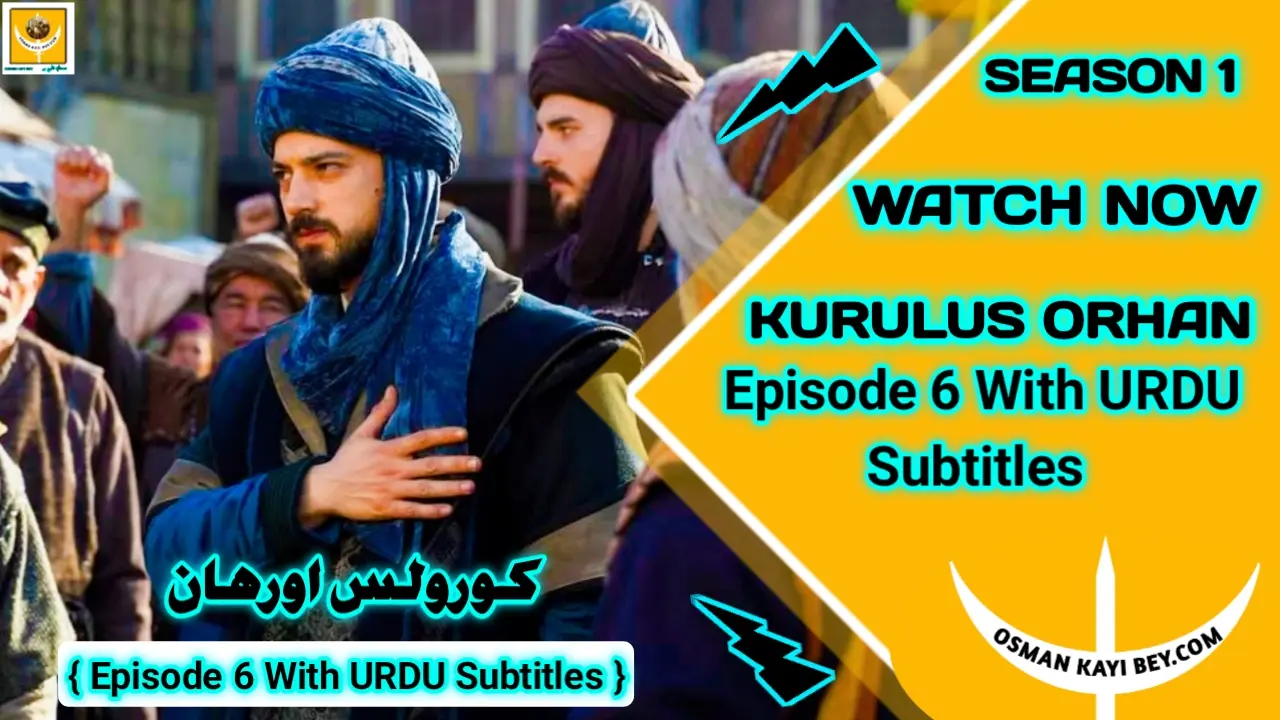
Kurulus Orhan Season 1 Episode 6 With Urdu Subtitles
The Expanding World of Orhan Bey’s Leadership
Kurulus Orhan Season 1 Episode 6 With Urdu Subtitles delivers one of the most complex and layered milestones of the season. Instead of framing events as simple confrontations, this episode dives deep into the emotional, political, psychological, and cultural dimensions of early Ottoman history. Every character moves with intention, every conflict holds deeper meaning, and every decision becomes a step toward the creation of a new state.
Kurulus Orhan Season 1 Episode 6 With Urdu Subtitles
This episode focuses heavily on Orhan Bey’s transformation from a courageous warrior into a visionary ruler. The story doesn’t rely on battles alone but explores humanitarian strategies, shifting loyalties, political deception, hidden threats, and internal family dynamics that shape the destiny of the Kayi tribe. Episode 6 becomes a living testimony to how leadership is forged not in moments of victory, but in moments of moral choice.
Orhan Bey Sends Hope into the Heart of Bursa
The episode begins with a striking deviation from typical medieval warfare: Orhan Bey chooses compassion over destruction. By launching supplies into Bursa using catapults, he performs an act that challenges every political expectation of his time. Instead of breaking the city’s will, he strengthens the bond between people and conqueror.
This decision reveals his understanding of medieval Anatolian politics. Turkish frontier leaders often built influence through generosity, fairness, and protection of civilians. By offering aid during crisis, Orhan shifts the psychological balance within Bursa. The starving citizens, trapped behind Byzantine walls, begin to question their loyalty to the empire.
The gesture reflects the spirit of early Ottoman rulers, who believed that winning hearts creates a stronger foundation than winning battles. It also showcases Orhan’s desire to build not just a military victory, but a moral legacy. As the sacks of food fall into the hungry hands of Bursa’s people, the entire landscape of the conflict changes. The city begins to see him as a protector, not an invader.
This moment becomes a turning point where the humanitarian approach subtly outshines traditional warfare. It sets Orhan apart as a leader who understands that compassion and strategy can work together.
Byzantine Fear and Political Calculations
Across the walls of Bursa, the Byzantine leaders feel the impact immediately. Rumors spread within the palace that Orhan Bey is trying to win the city through emotional influence. The Emperor interprets Orhan’s generosity as a threat more dangerous than any military assault. A revolt within Bursa would crumble Byzantine authority faster than a siege.
The Emperor’s meeting with Flavius and the Tekfur of Iznik reveals the internal panic. Their conversations display the fragile nature of Byzantine politics at the frontier. Instead of unity, fear governs their decisions. Instead of loyalty, suspicion dictates their moves.
Flavius brings a brutal but accurate perspective: hearts cannot be shielded by walls. If Bursa’s people emotionally detach from their rulers, the city is already lost. This realization pushes the Byzantines to create a new plan—one that targets Orhan’s influence rather than his armies.
This political shift demonstrates how medieval empires frequently employed deception, misinformation, and manipulation to maintain power. Instead of preparing for open war, they prepare for psychological counterattacks. Their strategy now focuses on sabotaging alliances, dividing the tribe from within, and weakening Orhan’s credibility.
Mysterious Symbols and the Shadow in Sogut
Far from the battlefield, Sogut faces its own rising darkness. Strange symbols begin appearing on walls, tents, and trees. Whispers circulate about unknown enemies haunting the region. Their presence is subtle yet powerful, hinting at organized sabotage.
Unlike typical antagonists, this secret group remains unseen. Their anonymity makes them more dangerous. The tribe cannot fight what it cannot identify. Their symbols might be coded messages, warnings, or marks for coordinated attacks.
This storyline brings a new kind of tension—psychological horror blended with political conspiracy. It reminds us that early Ottoman history was not only shaped by empires but also by sects, secret organizations, religious factions, and hired mercenaries operating in the shadows.
Orhan realizes that hidden enemies require a different type of response. Sword and shield won’t be enough. He must understand motives, track patterns, and anticipate silent moves. This subplot builds the foundation for future threats that will challenge not only the tribe’s defenses but also Orhan’s strategic mind.
Flavius and Fatma: A Dangerous Dance of Deception
Among the most intriguing arcs of Episode 6 is the unsettling interaction between Flavius—disguised as a merchant—and Fatma Hatun. When Fatma unknowingly speaks his real name, a quiet alarm rings. Flavius knows he has been recognized, even if partially, and must now maneuver more cautiously.
Fatma stands at a delicate crossroads. Her instincts sense danger, but social etiquette prevents her from reacting too strongly without evidence. Her expressions shift between suspicion, confusion, and calculation. She becomes a symbol of silent resilience—a reminder that women of the frontier were often the first to detect hidden threats.
Flavius uses charm, calmness, and fabricated stories—classic espionage techniques—to maintain trust. His manipulation reveals how deeply spies infiltrated tribal societies during wartime. Assassins rarely entered through force; they entered through conversation.
This subplot crafts a slow-burning tension that hints at larger betrayals waiting to unfold. It also shows how Flavius is not just a warrior but a psychological predator skilled in deception.
Marriage Talk and Family Rivalries
While political turmoil grows outside, the Kayi tribe faces domestic storms. Proposals arrive for Halime and Fatma, creating ripples across the camp. In early Turkish tribal culture, marriages were instruments of alliance-building. They determined political partnerships, economic relationships, and family hierarchies.
Didar Hatun’s involvement adds fuel to old rivalries. She pushes Yigit as a potential husband for Fatma, hoping to strengthen her own family’s influence. This makes Malhun and Nilufer tense, as old conflicts resurface beneath polite smiles.
Orhan becomes caught in the turbulence. As Bey, he must remain neutral. As a family member, he must choose sides carefully. His diplomatic approach shows how leadership inside a tribe was as difficult as leadership on a battlefield.
These scenes highlight that tribal politics were influenced not only by wars outside, but also by personal relationships inside.
Temurtas and the Temptation of Betrayal
Temurtas emerges as a complex figure in Episode 6. His loyalty has always been uncertain, and now a secret proposal pushes him into a dangerous moral conflict. Orhan assigns Sahinshah and Alaeddin to guide him, but Temurtas struggles with his own ambitions.
Medieval frontier societies often produced warriors who felt torn between loyalty and self-interest. Temurtas represents one such warrior. His silence speaks more than words. He stands between two paths—the path of honor and the path of betrayal.
Sahinshah’s involvement adds another layer of mystery. His movements, reactions, and decisions feel calculated. Does he follow Orhan’s orders, or does he carry his own agenda? This uncertainty makes the subplot even more gripping.
The psychological tension here is immense. One wrong move could break loyalty, split alliances, and destabilize the entire tribe.
I dedicate my time and effort to sharing Islamic history and the legacy of our heroes with the world. Your small donation helps me continue this mission. May Allah reward your support. 🤲
💖 Don’t be shy, even $3 makes a difference and helps keep this work going! ❤️
A Storm Arrives: The Emperor and the Mysterious Woman
The climax of the episode arrives when the Byzantine Emperor unexpectedly enters the Kayi lands. His presence sends shockwaves through the tribe. But the true intrigue comes from the mysterious woman traveling with him.
Kurulus Orhan Season 1 Episode 6 With Urdu Subtitles
SOURCE 1
She is calm, composed, observant, and unreadable. Her silent glances feel sharper than a sword. Every movement suggests she holds information capable of shifting the balance of power.
SOURCE 2
Is she an emissary?
A spy?
A political advisor?
Or someone with personal ties to Sogut?
SOURCE 3
I dedicate my time and effort to sharing Islamic history and the legacy of our heroes with the world. Your small donation helps me continue this mission. May Allah reward your support. 🤲
💖 Don’t be shy, even $3 makes a difference and helps keep this work going! ❤️
Her presence transforms the atmosphere entirely. The tribe begins to sense that the Emperor’s visit is not merely diplomatic—it is strategic, layered, and full of hidden intentions.
This encounter becomes the bridge between current tensions and future storms.
Table: Major Shifts in Episode 6
| Plot Element | Shift in Power | Result |
|---|---|---|
| Orhan’s humanitarian aid | Civilian support increases | Byzantine fear intensifies |
| Secret group in Sogut | Unknown threat rises | Tribal anxiety grows |
| Flavius-Fatma encounter | Identity risk increases | Suspicion deepens |
| Marriage proposals | Family tensions escalate | Rivalries reignite |
| Temurtas conflict | Loyalty shaken | Possible betrayal |
| Emperor’s arrival | Political landscape shifts | New dangers emerge |
Historical & Cultural Insight
The episode reflects real cultural elements of early Turkish frontier life:
Humanitarian leadership was a hallmark of early Ottoman rulers.
Marriage alliances played roles in political negotiations.
Espionage and coded symbols were common tools in medieval Anatolia.
Internal rivalries shaped tribal politics just as much as external threats.
These details give the episode an authentic historical touch, blending accuracy with storytelling.
Quote of the Episode
“Mercy can break walls that even armies cannot.”
Key Takeaways
- Orhan’s compassion becomes his strongest weapon.
- Byzantine leaders fear emotional influence more than military power.
- Sogut faces a new secret threat.
- Flavius manipulates trust from within.
- Marriage negotiations shift tribal power.
- Temurtas stands at the edge of betrayal.
- The Emperor’s arrival signals a new phase of conflict.
FAQ
He wanted to win the trust of the people, not just conquer territory.
Their identity remains hidden, signaling a deeper threat.
She unknowingly exposes Flavius’s identity, sparking major danger.
His intentions are unclear, but they promise shifting alliances.
She appears to be a major force in upcoming episodes.
Conclusion
Kurulus Orhan Season 1 Episode 6 With Urdu Subtitles paints a vivid picture of a society undergoing transformation. From Orhan’s humanitarian approach to hidden threats, from political deception to emotional dilemmas, the episode delivers depth, tension, and remarkable character development. It showcases the early foundations of a rising state—one built not merely on war, but on morality, unity, and strategic brilliance.
The episode ends with more questions than answers, setting the stage for an even more powerful continuation. The storm has arrived, but its true purpose remains hidden.
- Watch Now Kurulus Osman Season 1 Episode 5 With English Subtitles
- Kurulus Orhan Season 1 Episode 6 With English Subtitles
- Uyanis Buyuk Selcuklu Episode 33 With Urdu Subtitles
- Kurulus Orhan Season 1 Episode 3: Power, Pride, and the Shadow Over Bursa
- Kurulus Orhan Season 1 Episode 2 With English And Urdu Subtitles