
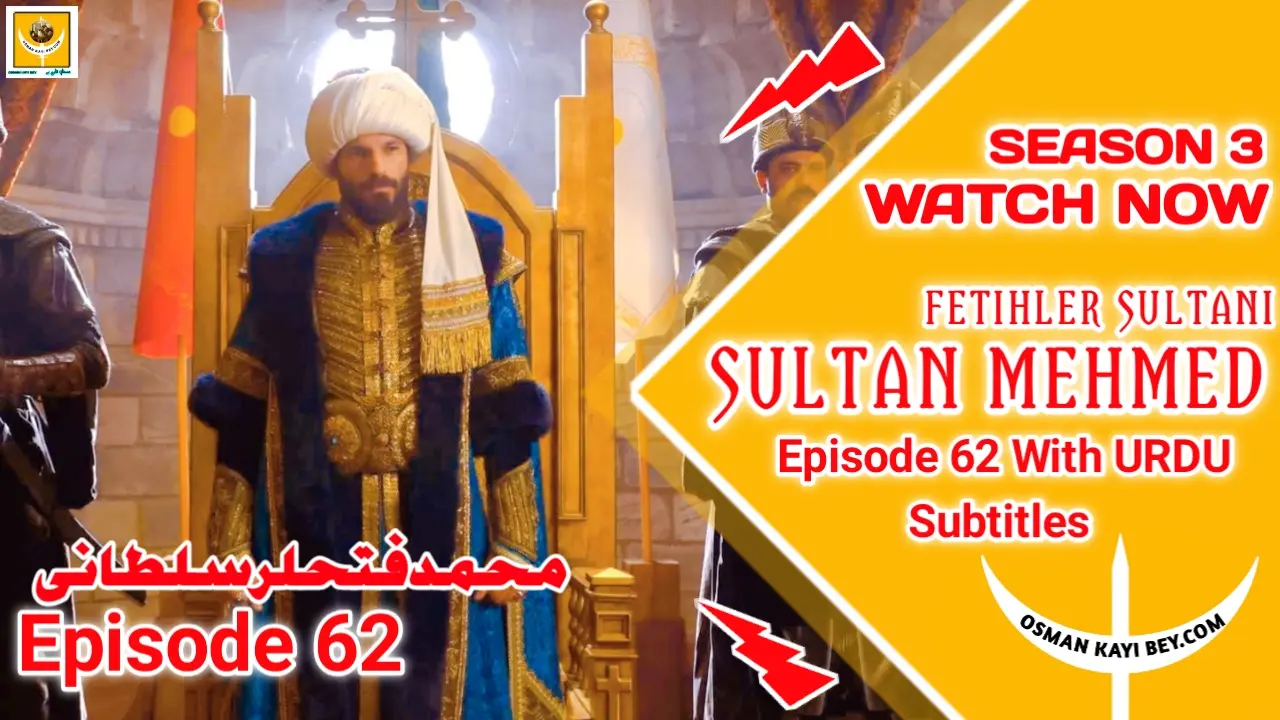
Mehmed Fehtihler Sultani Season 3 Episode 62 With Urdu Subtitles
The City That Refused to Fall Easily
As the Ottoman army advances toward one of the most critical gateways of the Black Sea, it becomes clear that this campaign is not only about breaking walls or crossing gates. Behind the city’s strong stone defenses lies something far more dangerous than iron or fire. The streets hide betrayal, ambition, and carefully prepared bloodshed. From the outside, the city looks close to defeat, yet inside its narrow paths, a different war is waiting.
Ottoman forces move from multiple fronts at the same time, confident that coordinated pressure will weaken resistance. However, the enemy inside the city has prepared for this very moment. Deadly traps are placed where soldiers least expect them. Ambushes are not random; they are calculated. Every street becomes a test of patience and discipline. Victory here cannot be rushed, because each careless step costs lives.
This phase of the war shows a clear truth: entering the city does not mean conquering it. In fact, the real struggle begins only after the walls are crossed.
War Inside the Streets, Not on the Walls
As the Ottoman soldiers push forward, the structure of open-field warfare collapses. Wide formations break into smaller groups. Orders are harder to pass. Visibility is limited. From rooftops, behind doors, and from hidden corners, resistance strikes suddenly. This kind of fighting demands sharp instincts rather than numbers.
Princes, pashas, and akincis all face the same danger. Rank offers no safety here. The city turns into a maze where courage alone is not enough. Old rivalries and personal grudges rise to the surface. Some defenders fight not for the city itself, but to settle long-standing hatred. Others resist because surrender would expose their secrets.
At this stage, the war becomes deeply personal. It is no longer about banners or speeches. It is about survival, fear, and unresolved pasts.
The Illusion of Victory Shatters
For a moment, it seems as though the city has already fallen. Certain areas fall silent. Resistance appears scattered. Yet this silence is misleading. The enemy is not defeated; it is regrouping. The deeper the Ottoman forces move, the more organized the resistance becomes.
This is where many commanders fail in history—believing that the hardest part is over. But Sultan Mehmed understands otherwise. He sees that the city is testing the Ottoman resolve. The walls were only the first defense. The real strategy lies within the streets.
The idea that conquest ends with entry is shattered. What follows is endurance.
Sultan Mehmed’s Defining Decision
At this critical moment, Sultan Mehmed makes a decision that will define the course of the battle. Instead of remaining at a distance and issuing commands, he chooses to move toward the center of the conflict. This is not a symbolic gesture. It is a calculated act of leadership.
By placing himself where the danger is highest, Mehmed sends a clear message. Authority does not hide. Leadership does not wait for reports. It acts.
This move is not just military. It reflects the mindset of statecraft. A ruler who understands that fear spreads faster than orders must confront that fear directly. Mehmed’s presence stabilizes the situation. Soldiers fight with renewed focus. Confusion begins to fade.
History often remembers such moments not as reckless bravery, but as necessary control.
Shadows Beyond the Battlefield
While swords clash in the streets, another struggle unfolds in silence. The war is not confined to open fighting. Escape routes, secret passages, dungeons, and dark alliances come into play. Some prepare to flee. Others seek protection under new power. Loyalty shifts quietly.
This is where empires are truly tested. Not everyone fights openly. Some fight by hiding information. Others survive by choosing the right moment to betray. These unseen movements shape the aftermath of conquest as much as the battlefield does.
Mehmed is aware that taking a city also means managing its fear, its elites, and its hidden networks. Victory without control leads to chaos.
Fear as a Weapon and a Test
Throughout the city, fear spreads among all sides. Defenders fear exposure. Traitors fear discovery. Even loyal soldiers fear sudden death in unfamiliar streets. This fear does not stop the war; it defines it.
Sultan Mehmed understands fear better than most. Fear can destroy an army if ignored. But if directed, it can bring obedience and order. This episode shows Mehmed not only as a commander, but as a ruler shaping the emotional state of war.
The test here is not strength alone. It is patience. Rash action would lead to disaster. Controlled pressure leads to submission.
Themes and Symbolism
This episode highlights a powerful theme: conquest is not an event, it is a process. The fall of walls symbolizes the collapse of physical resistance, but the streets represent psychological resistance. Another key theme is leadership under uncertainty. Mehmed’s decision to step into the heart of danger reflects the idea that true authority is visible, not distant.
The city itself becomes a symbol—appearing defeated on the surface while hiding danger within. This mirrors many historical conquests where victory was claimed too early.
I dedicate my time and effort to sharing Islamic history and the legacy of our heroes with the world. Your small donation helps me continue this mission. May Allah reward your support. 🤲
💖 Don’t be shy, even $3 makes a difference and helps keep this work going! ❤️
Mehmed Fetihler Sultani Season 3 Episode 61 With Urdu Subtitles
SOURCE 1
Connection to What Comes Next
The events of this episode lay the foundation for future developments. The hidden alliances, escape attempts, and internal conflicts will not disappear overnight. How Mehmed handles the aftermath will determine whether this conquest strengthens the state or plants seeds of rebellion.
SOURCE 2
What happens inside the city will echo beyond its walls. Decisions made here will influence loyalty, resistance, and governance in the episodes ahead.
SOURCE 3
I dedicate my time and effort to sharing Islamic history and the legacy of our heroes with the world. Your small donation helps me continue this mission. May Allah reward your support. 🤲
💖 Don’t be shy, even $3 makes a difference and helps keep this work going! ❤️
Conclusion
The road to conquest is never straight. Sultan Mehmed’s campaign shows that true victory demands more than weapons. It requires understanding human nature, fear, ambition, and patience. Episode 62 captures the moment where history shifts from force to control, from battle to governance.
The city may fall, but the real challenge is ensuring it stays fallen.
Key Takeaways
- Entering a city is not the same as conquering it
- Urban warfare changes the rules of battle
- Sultan Mehmed’s leadership is based on presence, not distance
- Fear plays a central role in shaping victory
- Hidden alliances can be as dangerous as open enemies
FAQs
No. The walls are crossed, but resistance continues inside.
To restore order, control fear, and lead from the front.
The fighting shifts from open warfare to close, urban conflict.
Yes. Hidden plans and secret alliances play a major role.